Friday, September 2, 2016

Why should you love your old Camera?

It is pretty common tendency of people that to get decent pictures you need a decent equipment.
Many people love to brag how bad their "recently became old" Camera is. Thats true technically unless you Love your Camera. New cameras have advanced features and are more reliable, but it doesn't make your old one a piece of crap. It sounds pretty Philosophical and emotion driven statement but it is true on practical front... Lets visit the reasons one by one.

1. Your camera is best of its time.
You have studied the market first and got what you have in your hand. The camera satisfied exactly what was your budget and requirment. Now you don't want to fool your own decision right? People have taken amazing pictures with the same model. Then its not your camera, its your techniques that lag behind.

2. Your synchronisation with camera.
you have spent ample time with old camera. You are habituated to each inch of it. You knowing unknowingly hit the exact same button that you wanted to. You are used to its layout. That matters a lot when you shoot something that will never happen again. You don't want to keep playing between the 'advanced menu of the NEW camera' that you hardly know about while a once in a life time thing is happening in front of you.

3. Your camera limitations make you a genius.
Yes, they do make you a mastermind. If your camera cant go at high ISO you learn how to keep hands stable at real slow shutter and not causing a blur in picture.
if your camera has limited controls, you learn how to customize the 'function button' at your disposal. If your camera cant shoot any good picture in low light, you learn how to 'arrange light and object', it makes you a master composer.
This way, your camera limitations makes you think out of the box, out of the camera and takes you to the picture. It teaches to learn and control the reality than to get trapped into the made up realities of digital world. In sort it brings out your skills.

4. It will always be there as a back-up camera for your new high-tech one.
It has served you for a pretty longer time, it will do the same when your primary camera gets seek for sometime if any, or is battery drained or when you require an additional coverage. It doesn't deserve to be bragged bad.

5. Yes this one is emotional.
This camera of yours was your companion and has taught you many things. You have explored the world of photography because of this little chap. It was a miracle for time when people used to wait for its launch.
Can't you really show some respect to your old buddy and glance it just once with feeling of love and affection?

Thursday, April 21, 2016

How to take good pictures???

You take good pictures. That's why you have thought about reading this. Now its the matter of taking your skills little further.

You know where is the button to take picture, how to play pictures, how to upload them to social media sites and know nominal techniques in your favourite editing app. Thats enough of knowledge to understand what I'm going to share with you.


I had several questions about photography few years back. It's always hard to know everything about the camera but at least knowing how it works and how to operate it can help improve your pictures a hundred times. After spending years on camera forums, hundreds of hours of youtube tutorials and workshops, I have ended up with these simple conclusions that will help you achieve flawless images without getting into much details.

Tip # 1.
ALWAYS SHOOT IN GOOD LIGHT
- It seems hard because we have parties in gloomy lights and indoor with fluorescent lights. Don't worry; I'm not asking you to use professional flash units. It's about how good the subject you shoot is lit. Make sure that the subject/person you take photograph of always has enough light to be seen properly. Other wise you will end up with dark image, or to get enough light, your camera takes long exposure that results in blurred image.
-Try to shoot with the light and not against the light (For example, a person facing the sun will have good light on his face than the one where sun is at the back of the head). This enables your camera to use optimum settings and produce a good exposed image.
-Too bright light gives scope to too hard shadows. So if you are under direct sun, your image will have too much light and too dark in the shadows, that makes up the worst image.
-Bottom line is, find the place and angle where your subject gets proper light to achieve the result you want.


Tip # 2.
KEEP THE CAMERA STEADY.
- Being careless about how you hold the camera is the major reason for getting blurred images.
- Hold the camera with both the hands, if possible use an additional support like a wall, a tree or what ever you can rest your arm or back on. This helps to  minimise the camera motions.


Tip # 3.
FRAME THE PICTURE BEFORE CLICKING.
- Have you seen profile pictures where you can hardly find the person who is featured in it? and see lot of trees or crowd around him/her? This may be because the photographer didn't know what to shoot.
- Always make a picture in your mind, try to find a place from where you get that light, angle and the frame.
- Keep unnecessary things out of the frame, look corner to corner for any unwanted object getting in picture.


Tip # 4.
OPTICAL ZOOM GOOD, DIGITAL ZOOM BAD.
- Optical zoom is mechanically altering the light your camera receives. It is like using a binocular. It is the best way to zoom while taking the picture.
- Digital zoom is simply stretching the pixels. In this case, your picture looses the quality drastically. If you don't have enough scope to zoom optically, move closer to the subject to get the desired field of view.


Tip # 5.
PRACTICE, PRACTICE AND PRACTICE.
- Taking more and more pictures will help you understand your camera and yourself. This develops a kind of bond between you and your camera that leads to great pictures.
- More photos you take, more expertise you get. In this way, you will understand every thing, how to handle, what is best light for what situation, what frame is good for what kind of things etc. etc.


Once you are done with this, and you start getting good result after following this, you can read further at BASICS OF PHOTOGRAPHY.

Tuesday, May 8, 2012

BASICS OF PHOTOGRAPHY Part-I (Understanding the camera)

  This article is for beginners, If you find this too primitive and you already know more than it has, then please wait for the forthcoming posts dealing with actual photography techniques specialising nature photography (macro-photography, Landscapes and wildlife).


Q: How does a camera work?
A: Camera is a devise that records the light falling on its sensor (either film or digital sensor). It is necessary to make a good impression of light on the sensor, which is done with the help of lens made of glass. 


For more on lens Click here


Q: What is difference between film (roll) and digital camera?
A: Traditional film cameras use a typical film roll made of plastic (either polyester, nitro-cellulose or PET). This film is coated with the halide salts (a light sensitive material that changes color when exposed to light). The film cameras can not save photos in the memory card or flash drives or even images can not be seen unless they are printed.
Where as the digital cameras have the digital sensor ( CCD, CMOS, LIVE MOS etc ) which converts the light captured into digital signals and thus can be recorded in memory cards. (Like in your mobile phone camera.) And images can be seen on its display or in your computer.

Film roll

The digital imaging sensor

For more on digital sensor Click Here


Q: Which is better, film camera or digital camera?
A: It was hard to distinguish between quality couple of years before. But now, the answer is obvious. The digital camera have tones of advantages over the film camera. Few benefits of digital cameras are listed bellow.
1. Easy to view images, saving them or to print them. While film needs to be developed and then mirror printed.
2.  Ease of selecting amount of light manipulation. This is generally called ISO sensitivity. As much the ISO value, more is the ability of sensor to capture photos in low light. In film cameras, we need to change the whole film to change ISO. But in digital camera, it is just a matter of single click.))))
3. Now (point and shoot) digital cameras are very small in size and have all automatic adjustment according to the scene. Where as the film camera has fixed setup or demand manual operation for every shot.


Q: What is megapixel? Is it true more the MP more the quality?
A: Mega (million) pixels (dots) are the color dots that makes the whole image. More the dots, larger the image. But unfortunately it is not true all the time that more the dots better the image quality. The quality depends on the pixel density, if the pixel are spacious enough, they can capture light well, if pixels are tightly arranged, they struggle to get ample light and produce noisy image. Thus two sensors with same size but different pixel count produce images with different qualities. But recent technologies like EXR by fujifilm, Micromirror/gapless canon, and widely used back-light illumination technologies have overcome this flaw at some extent. This means more megapixels can be added to camera without compromising image quality.
Canon's revolutionary gap-less microlenses technology


Q: My mobile captures blurt images in night.
A: Mobile phone ports very tiny imaging sensor. So they require more light to take good images. Simple solution for that is hold the mobile as steady as you can to avoid vibrations until the image is shot completely. This happens because of long shutter speed which is discussed ahead.


Q: Which camera brand is good?
A: Their is no exact answer for this question. The market keeps surprising the users by adding new cameras out running previous faults. How ever, some recent developments made by leading manufacturers like canon, fujifilm, sony, olympus, panasonic are remarkable. Since long it is believed that, nikon's compact cameras are manufactured by Sanyo which are the most sold and trusted cameras in India so far.
Almost all these brands have independent ranges targeted towards different users depending on their need. However its true, due to patent issues, some good technologies have been restricted to select brands. But that is imitated quickly by others under independent title. Leading to more confusion to the new comers. So better trust the technology trust the hardware in it not the brand.


Many more questions are yet to be answered. Hope you'd keep in touch...

Sunday, April 22, 2012

The Masterpiece ever crafted... 50 1.8D

(Review based on owned Nikkor AF 50mm f/1.8 D)
It's surely no overwhelming in prays of Nikkor 50mm 1.8D. Definitely you'd not get as sharper, faster, and genuine piece of glass at Rs.6000-6500 (check current price at flipcart / B&H)


¤¤It's simpler lens arrangement confers it the cheaper make, and thus this handsome lens is in our hand at such a great bargain.¤

Pros/Features:
Light in weight.
Light to pocket (cheap in cost)
One of the widest apertures (f/1.8)
Delivers great Heptagonal Bokeh (as it has 7 aperture blades)
An ideal portraiture, general purpose focal length (50mm on fx 75mm on dx)*
Fixed front element (usefully while using filters wiz. Polarization filter)
AF on motorized bodies**
Common filter size 52mm
Fits all Nikon bodies without exception.
*Fx- full frame bodies with crop factor 1.0X ex. D3, D3X, D700, D800 etc.
Dx- APSc bodies with crop factor 1.5X ex. D40x, D3100, D5000, D7000 etc.
*Motorized bodies refers to one with auto focus motor. And usually has pentaprism instead of pentamirror, the top binary panel. Wiz, all the higher cameras including D90 and above.

Cons/Limitations:
Doesn't support AF on non-motorized bodies.
No hood mount (needs screw in hood)
Not as sharper as 50mm 1.8G (check prize at Flipcart/B&H)
Rest is all fine for the prize tag. :-)

-The lens is the simplest of its kind, thus lacks the renowned ED element. As a result some time (at harsh light) the chromatic aberration is slightly visible, although it is not prominent and rarely seen.

-52mm diameter however makes it one of the slickest lenses. So it's f/1.8 aperture is slight tighter than wide diametered lenses.


          with 52mm +1,+2,+3, micro filters


Exif: camera : D3000
Shutter speed : 1/50"
Aperture: F/2.8
Micro converter : slik +2 and micro ring converter (filter)
Syncro 1/50" Sigma EM 140 DG

- With remarkable attention we could find the yellow outlines spilled out its neck, antenna and borders facing the direct light.


Sharpness test


My omega Turbilon
Exif: Camera D7000
50mm 1.8 D ( no micro adapter used)
F/2.0
1/125"

Notice that, this photograph was shot without any micro converter, though the lens gave quite a closer reach. Although this is cropped around 70% . But as it seems too clear to ignore it is not that sharp until it is operated at f/2.8 or lower.


Chromatic Aberration

Light is harder here at every left outline. So is the chromatic aberration.. But this so rare, I had to search for my photographs to find one with it. This was shot at f/1.8


Have it, feel it...


The Wider aperture helps creating a creative Bokeh, it also helps getting products touch to your photo...


-This much large it's aperture goes... This lens is the best option for those wanting to experiment with reverse mounting or using extension tube.
-The low light performance for new users would definitely surprise, after all f/1.8 is practically huge figure.
-
Verdict: If budget matters you, get this lens if needed. Be assured, you are not compromising quality for prize. If you own basic type SLR (with pentamirror) opt for G variant as D will not autofocus on your camera. My time with mine masterpiece (50mm 1.8D) has been great. Now it's your time to tell yours.
Your suggestions and doubts are always welcome.

-The views are personal based on various reviews and experiences.
-Please Google for any update if any with mentioned gadget, and do inform us.
-Your comments are valuable. Or contact s_kalwale@yahoo.co.in

Wednesday, January 5, 2011

70-200..... Nikkor vs canon

  (Updated: 25th April 2012)


  If you are asked "Which will be the lens you would love to carry while you are on the African Jungle Safari or The Olympics, without compromising the quality and being tricked by the focal length?"

        No doubt, 70-200 f/2.8 VR/IS will be your first answer, then gradually you would turn to 70-300 for focal length or price, but off course not full heartedly.

   This must to have Pro series of telephoto lens gets its unmatched place due to its key focal range and the aperture as wide as f/2.8...


  [The market is bloomed with lenses from your camera manufacturer and the most marketed accessory makers, but if you think wise, you wont go for third party]


   Here is The most common Line-Up of both Canon and Nikkor Forces.. ( in alphabetical order, with links to check latest price).

  1. Canon EF 70-200 f/4L IS USM
  2. Canon EF 70-200 f/2.8 IS USM
  3. Nikkor AF 80-200 f/2.8D ED
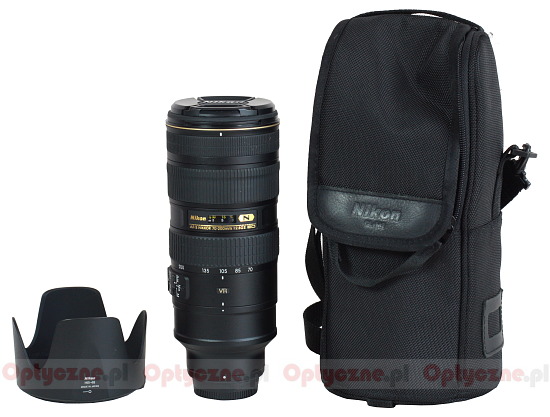
  4. Nikkor AF-S 70-200 f/2.8 ED VR
  5. Nikkor AF-S 70-200 f/2.8 ED VR II
  I was ambiguous for the same while making a budget for my first ever full frame D-SLR. Being a Nikonian basically I finished with Nikkor ED VR II (though don't own yet).
  During this course, I came across many reviews, Discussions and Hands-ons. So, here I'm with enough to talk about.

1. Canon EF 70-200 f/4L IS USM and Nikkor 80-200 f/2.8 ED
  Both lies in the price range around 1100 to 1300 $ range at various stores and as per the availabilities.(4L is around 100$ expensive)

  Primary observation here is that, the Canon 4L has the integrated Image Stabilization and the Ultra Sonic Motor.
  Basically fast lenses are known to have wide aperture,
No matter whether it is an IS lens or not, the f/2.8 is the fast on paper. But the Canon's classic IS system changes the game. Its IS is 2 stop better than normal stabilized lenses. So it is fast too. Nikon 80-200 does not focus automatically on basic camera bodies (D3100,D3200,D5100) and fails with teleconverter too. While canon 4L can focus with 1.4x. (at f/5.6)
  If the white paint of the pro spec (L-series) fantasies you. surely, you'd get a 4L IS USM rather than the non-VR 2.8D

2.Canon EF 70-200 f/2.8L IS USM & Nikkor AF-S 70-200 f/2.8G ED VR


    The Nikkor Glass costs something like 2200$ and Canon 2100$
The the smallest difference lies between the VR of being II, which is practically 6 stops better (though Nikon claims it for 4 stops alone..)
Both the Lenses are The Best zoom lenses by respective manufacturers, with IQ directly comparable with 85 f/1.8 or 200 f/2.0.


Canon 70-200 2.8L IS USM


 (The Basic Construction of these lenses is somewhat similar)

   The Extra low Dispersion elements plays all draining out the threats of Ghosts and Flares. Non-visible distortion, (If you are not using a magnifier for pictures to blame it !...)

All the lenses listed are the best at their respective manufacturers.  The decision remains to the camera body you own, or the price you afford.

Verdict :
Well, my personal choice would be Nikon AF-S 70-200 f/2.8G If ED VR (I). Nikon has dropped its price tag significantly considering  it's chronic battle against canon.
- The Opinions are personal supported by various reviews.
 - Any discussion or Complains are welcome by author - Sudarshan at s_kalwale@yahoo.co.in
B&H

D7000's prices to drop down


 The Nikon D7000 is no doubt a good gadget for enthusiasts to have, but it yet seems to be bit expensive. (Rs.84000/- MRP for the Indian Market).
  The B&H photo USA sells it at 1199$  i.e. Rs.59950/- only......
  Hope Nikon would surely show mercy for its lover hub -India.
 - The Opinions are personal supported by various reviews.
        - Any discussion or Complains are welcome by author - Sudarshan at s_kalwale@yahoo.co.in

Tuesday, January 4, 2011

Survival Of Nikon D90, D3000, & D700

Hello friends,
                    Its a long time the Nikon's master crafts, The D700 and The D90 have been in the market. These top of the grade cameras were surely the leaders of their time, and are surely till date. But their existance may be challanged due to various reasons.
Lets see one by one reasons for that.

Nikon D700....


        Released in mid 2008, The Nikon D700 is the class leading 35mm D-SLR. The Second Best ISO performer later D3s, this camera has recently loosened its heavy price tag. Later released Canon 5D MK II theorotically eqauls the ISO of the Nikon D700 but as per the photographs compared by most of the people, D700 proves to be about 2 stop better. The lack of movie function (not necessory) and the resolution (12MP Vs 21MP) are the key points (mostly amateurs think about, not the pros).
       But, Before purchasing Nikon D700 one surely thinks about, the age of the technolodgy. Nikon's APS-c Size sensors now a days perform great in terms of ISO, though not comparable with D700, fit in budget (Below 2000 $) along some good lenses. The crop factor which is the boon for the wildlife and sports photographers also is a considerable matter.
      [Nikon D7000 released earlier with 16MP resolution and normal ISO range of 6400, Corner Mg alloy body and tough weather sealling (generally not provided for this price) is a considerable alternative for low budget high demand amateurs].

               ...Major Thing One Should Concern Before Purchasing D700 is , New Alternative is Not In The Nikon Product Pipe-Line, So We Wont Need To Repent On Not Waiting For Expeed II and 102k ISO, and sure, a 35mm full frame sensor with additional pixel count, And All at the price of the D700 or bit more.......


D90....


      The D90 was called King Of APS-c, couple of years ago. First to incorporate the Movie feature, Nikon D90 yet lures the entry semi-pro line-up of the beginers.
      [The low cost camera, the brand new Nikon D3100 has it all to think over.
      ....14.6MP resolution 6400 ISO for an emergency and the Full HD feature are the highlits of this big featured small package. The most important is the new Expeed II processor in it]


The New Rival
      D7000


D3000


                                             Can D3000 stand against new D3100  
No need to give more reasons for the challeges for existence of Nikon D3000.
Its 10.2 effective megapixel CCD sensor and noisy images even at ISO 400 gives wide scope for its extinction...
    No dought the succider D3100 gets all the responsiblity to throw it out of the market..........


        - The Opinions are personal supported by various reviews.
        - Any discussion or Complains are welcome by author - Sudarshan at s_kalwale@yahoo.co.in